















Popular Search
Blogs
Tips for trail running beginners by Saucony athlete Katie Asmuth

Whether you are a runner aiming to transition from road running to the trails for the first time
Whether you are a runner aiming to transition from the road to the trails for the first time or are already an experienced trail runner, today, Katie Asmuth, a Saucony-sponsored runner, will share some insightful and invaluable advice with all her fellow runners.
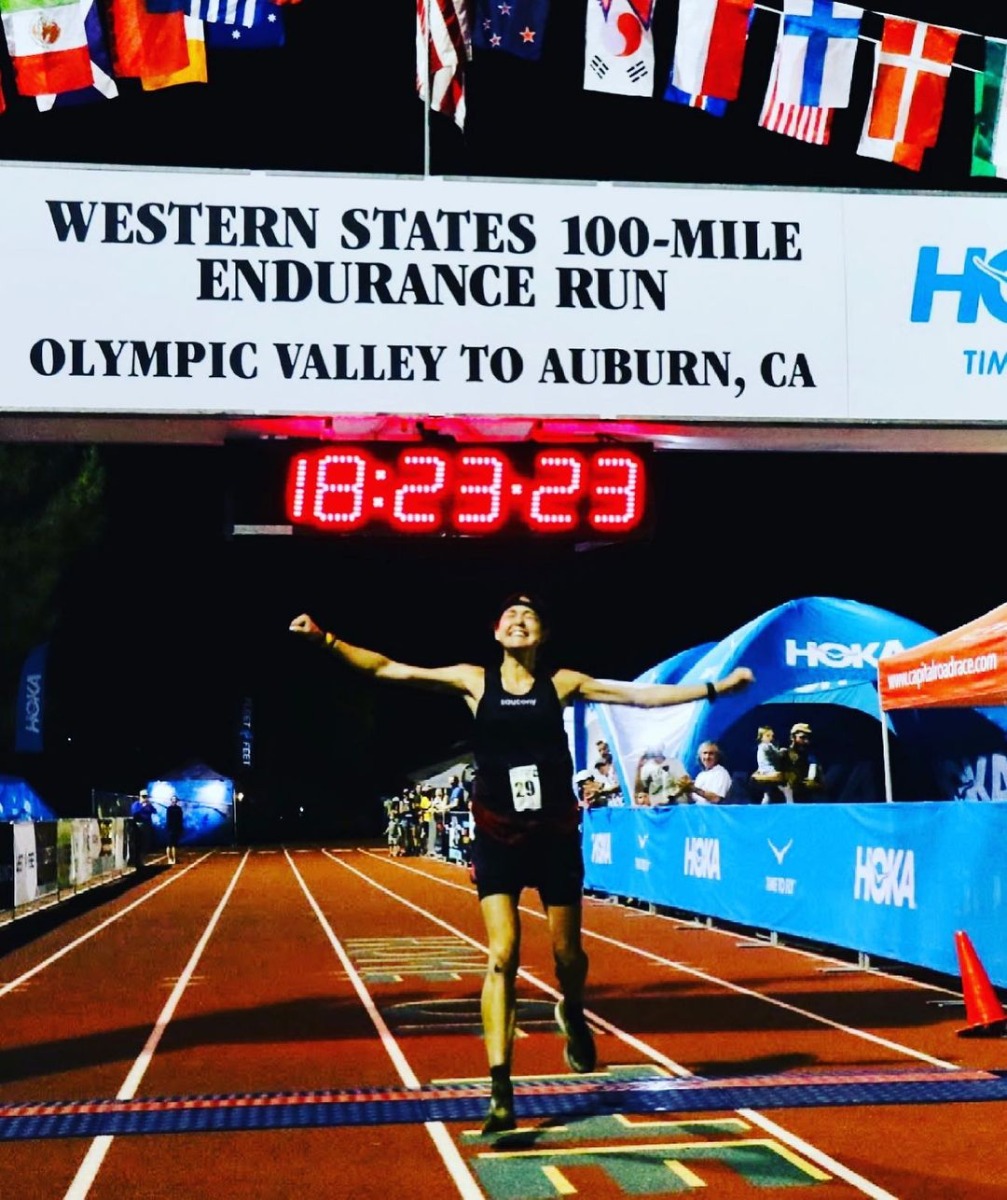
Some people say that if you can run on the pavement, you can automatically run on the trails too... Is that true? Not exactly. You might need to pick up a few additional skills, but the good news is that it is never too late to try trail running for the first time, and of course, for those already running, it is never too late to improve. Today, Katie Asmuth—who is a nurse practitioner, a mother of two, and a Saucony-sponsored athlete—lives to prove what we have said, as she had barely done any trail running until 2014. Yet, this summer, she is set to participate in the Western States 100, one of the world's most famous 100-mile trail races. With the tips she shares, we hope you will be ready to try trail running for the first time, run faster, go further, and dare to tackle difficult routes in no time.
Make the Transition
For beginners trying trail running for the first time, taking it slow seems to be the most important thing. “Trail running is quite different from road running, which is relatively predictable,” says Asmuth. There is so much on the trail—hills, mud, roots, or loose rocks, and those are just a few of the many things. So, start by adjusting your mindset that speed is not the priority when beginning to trail run, and it is perfectly normal for your pace on the trail to be slower than on the road—no need to be alarmed. Oh! Another thing is that trail running consumes much more energy than road running, so it is vital to carry enough water and snacks to refuel during your run. And one more point (which experienced trail runners often emphasize) is that it is okay to walk! “It is important that you do not take the run too seriously, beyond appreciating being surrounded by nature, filled with trees, dirt, and rocks,” which is something road running cannot offer us.
Get Faster
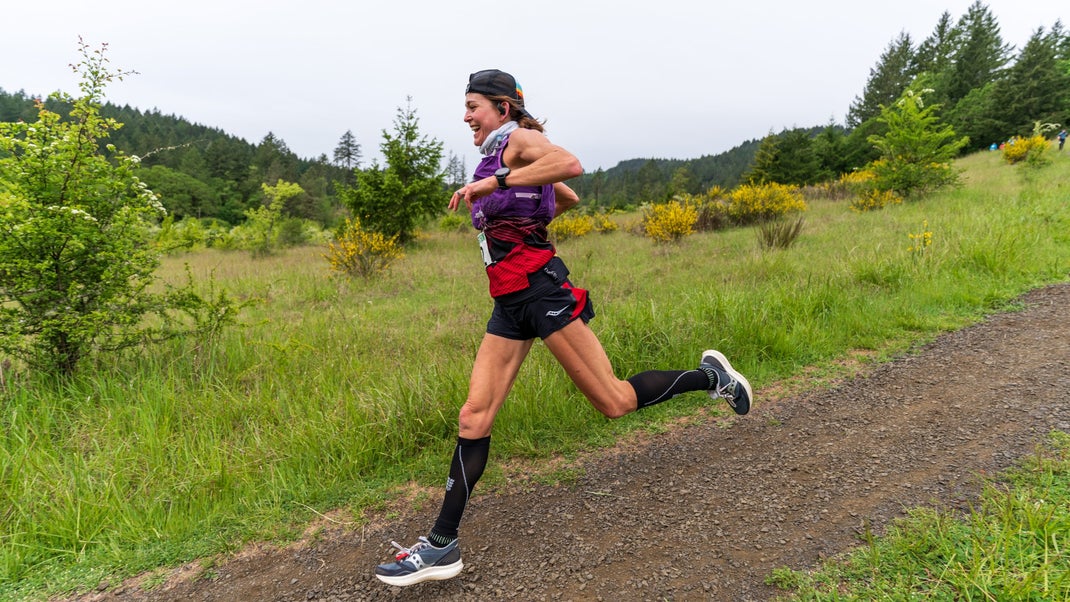
To get faster and better at trail running, you must increase the intensity of your training accordingly. “Don’t be afraid to up the intensity,” says Asmuth. However, intensity in training does not mean sprinting on a track for hours; rather, it is about integrating different running styles into your weekly training plan, such as intervals, strides, hill repeats, and speed work. These things are not reserved just for pro runners; if done in the right amounts, they will help your running progress and make it more agile and fun, Asmuth reiterates.
“If you don't forget to add intensity to your training, you will definitely become faster and more efficient, and that will make it easy for you to enjoy the trail ahead.”

Tackle the Technical
On the trail, we often encounter sections that are particularly difficult and require more skill than others. We call them “technical” sections, especially during downhill running, which is both a challenge and a worry for many beginner trail runners. However, it is an essential part of any trail run and hard to avoid. So, what does Asmuth recommend? She suggests always looking for more difficult terrain during training. In her regular runs, Asmuth chooses to tackle the most challenging paths to prepare her body and build confidence. Then, on race day, she opts for easier, more certain routes. If she knows a technical section is coming up, she refuels in advance. “I want to be confident and focused on the downhill,” says Asmuth. Even if you don’t run trails for competition or ultra-distance races, it is equally important to develop technical running skills to minimize injury risk.
Many trail sages have said, “Let your body flow; don't try to fight the descent. Actually, it's almost like dancing with it—just let it flow.” Simply put, the advice is to take short, quick steps and keep your upper body loose and relaxed. Oh! And don't forget to choose trail running shoes suitable for what you are doing. The key is the grip of the outsole and sufficient cushioning.
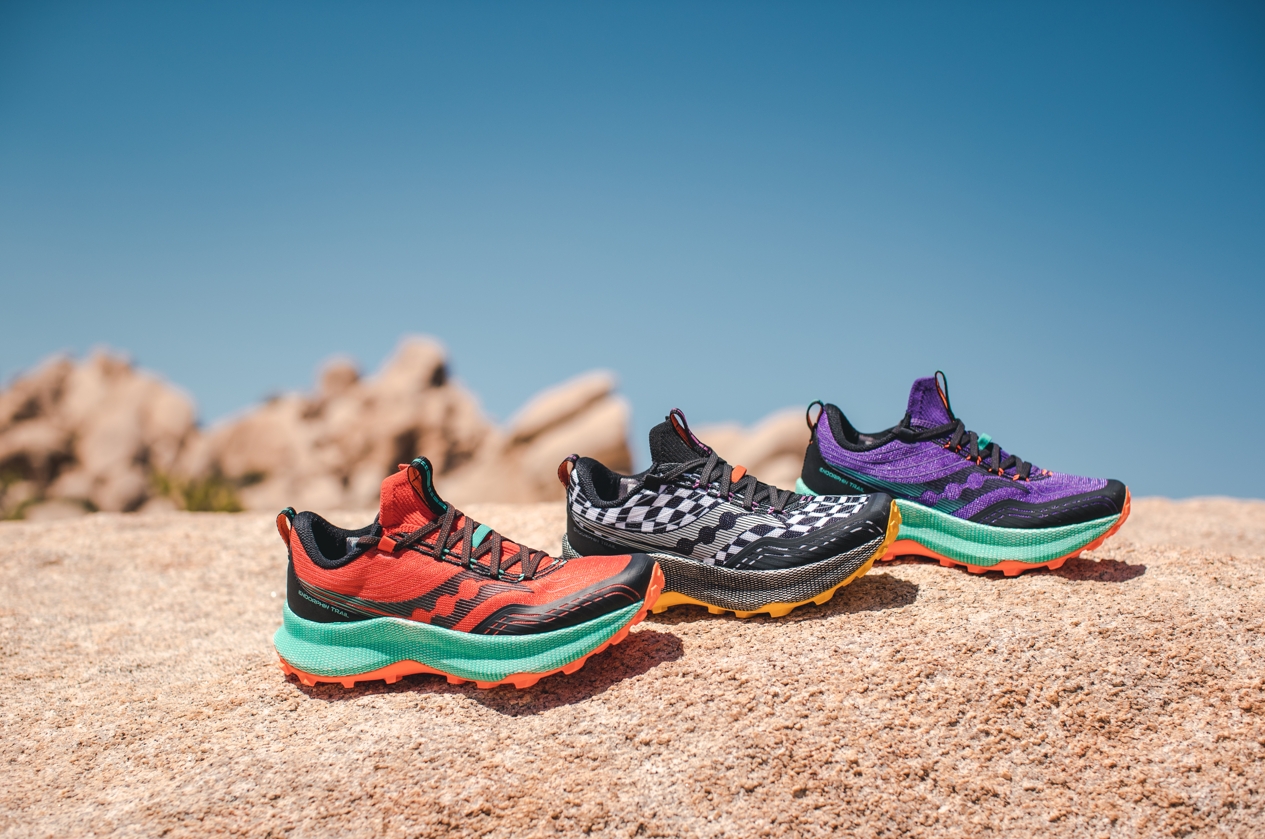
Asmuth chooses the trail shoes Saucony Endorphin Trail https://bit.ly/3yl21vT “They are supportive, highly responsive, and very efficient shoes,” she adds. “They offer extra protection, and the outsole comes with SPEEDROLL technology, which makes your feet feel springy when you run forward.”
Go Farther
Try going further than ever before! Asmuth's favorite distance is 100 miles! That figure might be intimidating for most people or average runners, but don't be afraid to try longer distances. What “far” means differs for everyone—for you, it might be 5 km or 10 miles. But regardless of whether you are in a race or not, “try to stay in the present and on the trail ahead. And for racing, instead of worrying about the entire distance you have to cover, try focusing from one aid station to the next, or even just from one tree to the next.” If you are new to trail running and want to try longer distances, remember to slow down and give your mind, bones, and tendons time to prepare. Set goals and challenge yourself to reach them, but do it gradually.
Beware the Bonk
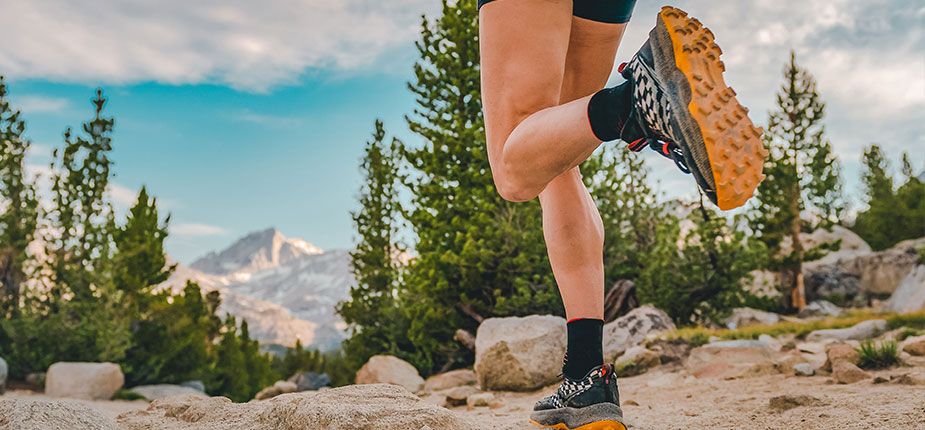
An army marches on its stomach! So don't let yourself get hungry and run out of steam!! Every trail runner will tell you how important fueling is, and it is even more critical to eat before you feel hungry, at sufficient intervals, and consume things your body can absorb energy from quickly and easily, mostly in the form of sugary snacks. Asmuth is a big believer in digestive preparation, and she tends to stick to a consistent fueling routine, whether training or racing. She sets a timer every 35 minutes to remind herself to eat and drink. She also plans to take in 250–300 calories every hour. On big race days, she prioritizes fueling earlier because of the longer distance. “Your stomach might cramp a bit, and blood flow is diverted to other vital organs, so things will be easier if your digestive system is working well from the start,” she says.
Ride the Waves
Ride the waves of your problems! You never know what will happen while you are on the trail, but you can bet that it won't always be easy. If you are in a race long enough, you will encounter both moments where your heart is pumping and your endorphins are soaring, as well as moments where your feelings hit rock bottom. The key is to understand and accept the process. For example, this past January, during the Bandera 100K race, Asmuth fell and broke her nose, with blood everywhere. But instead of quitting, she kept her cool, grabbed a tampon for her nose, and continued until she won the race.
What makes her love trail running so much is that it is full of various emotions you encounter when your body faces challenges. “It is fascinating to discover the deepest parts of yourself that you don't often see every day, and you learn that the other side of you is quite a different person.” Ultimately, when you are off the trail and might be feeling bad, it helps you significantly with your attitude. “It is great that we can access the problem, know how to handle it, and choose to act on it.” Asmuth adds with a chill tone, “But if you are really feeling down, try finding something sweet to give your body a sugar boost; it always helps.”
Translated from: https://www.outsideonline.com/outdoor-gear/run/how-your-trail-running-game/
Source :
Instagram kt_runshappy,
https://trailrunner.com/trail-news/saucony-signs-trail-runner-katie-asmuth/
https://www.trailrunnermag.com/people/katie-asmuth-prepares-to-toe-the-line-at-western-states